



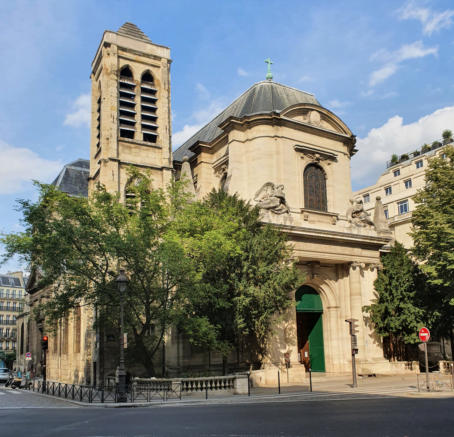
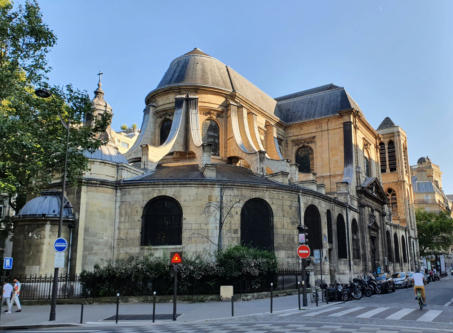
This church was built between 1656 and 1763. Its
clocktower is a remainder of an older building (1625).
Due to the construction of the Boulevard Saint-Germain,
the main entrance was moved and the absis was
remodelled. The principal (neo-classical) facade was
finished in 1937, the facade Rue des Bernardins with a
beautiful wooden door, dates to 1669.
Since 1977, the church houses the members of the
Society of St. Pius X.

E6
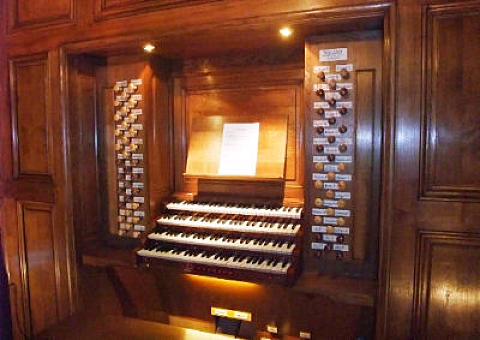
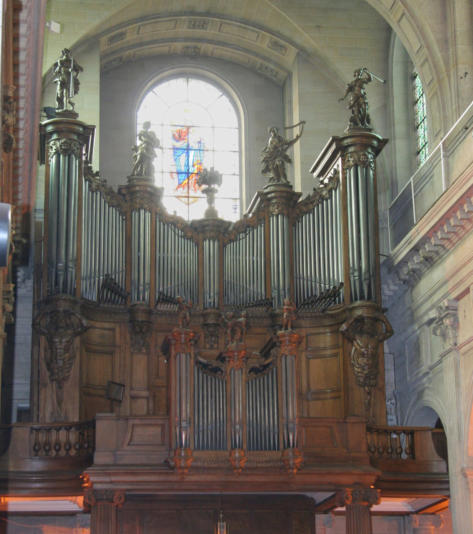
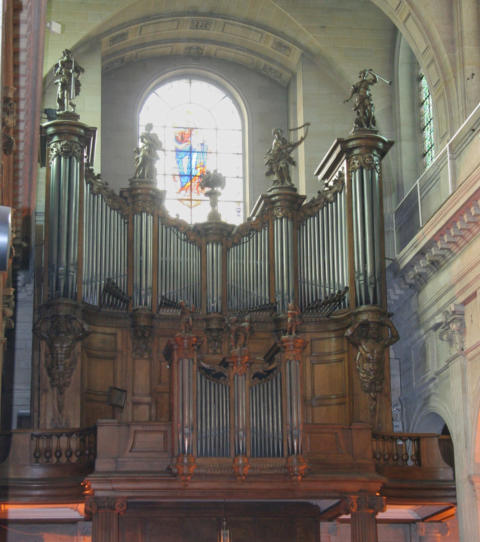
The organ of Saint Nicolas du Chardonnet comes from the
former parish church of Saints-Innocents, built by François
Thierry between 1723 and 1725 (IV/24).
1766
François-Henri Clicquot carried out repairs on the wind
system.
1787–1790
The organ was transferred to Saint-Nicolas-du-Chardonnet
and enlarged to IV/37 by François-Henri Clicquot. After his
death in 1790, the work was completed by his son Claude-
François Clicquot.
1820
The instrument was renovated by Pierre-François Dallery,
including some changes to the reed stops.
1897
Merklin was commissioned to rebuild the instrument,
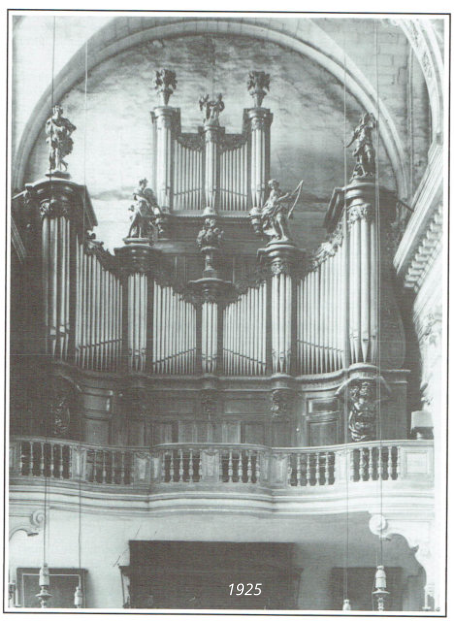
reducing it to II/24. The former wooden gallery was
replaced by a stone one. At that time, the *Positif de dos*
case was placed above the *Grand Orgue* to conceal the
expressive box of the Récit.
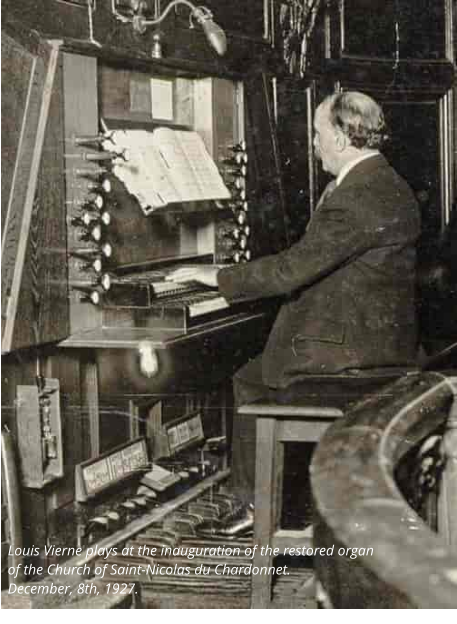
1927
The organ was restored by P.-M. Koenig, who took the
opportunity to enlarge and revoice it.
1935–1936
A new gallery was installed, and the *Positif* was moved
back to its original position by Victor Gonzalez, who also
expanded the instrument. The pipework from Merklin’s
former Récit was placed in the Positif case, the shutters
were removed, and several new stops were added, shifting
the tonal palette toward a neo-classical style: 4’ Flûte,
Nasard, Quarte, Tierce, and a IV-rank Plein Jeu.
1961
The instrumental section was reconstructed by Roethinger
and Robert Boisseau. All the pipework was inventoried and
classified. The new stoplist was drawn up under the advice
of organist Léon Souberbielle and inspired by Dom Bedos’s
fifth design in his “descending classification” — for a large
eight-foot organ — with eight ranks of Plein Jeu at the
Grand Orgue and four ranks at the Positif.
The organ was brought to 43 stops distributed over three
manuals and pedal.
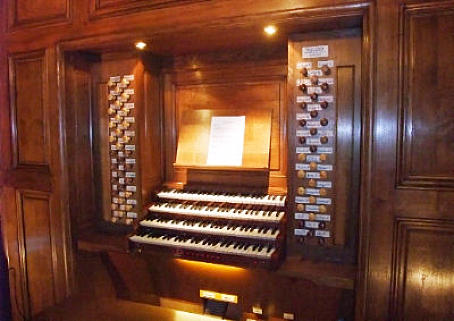
The action was electrified, and a detached console was
installed.
2007-2009
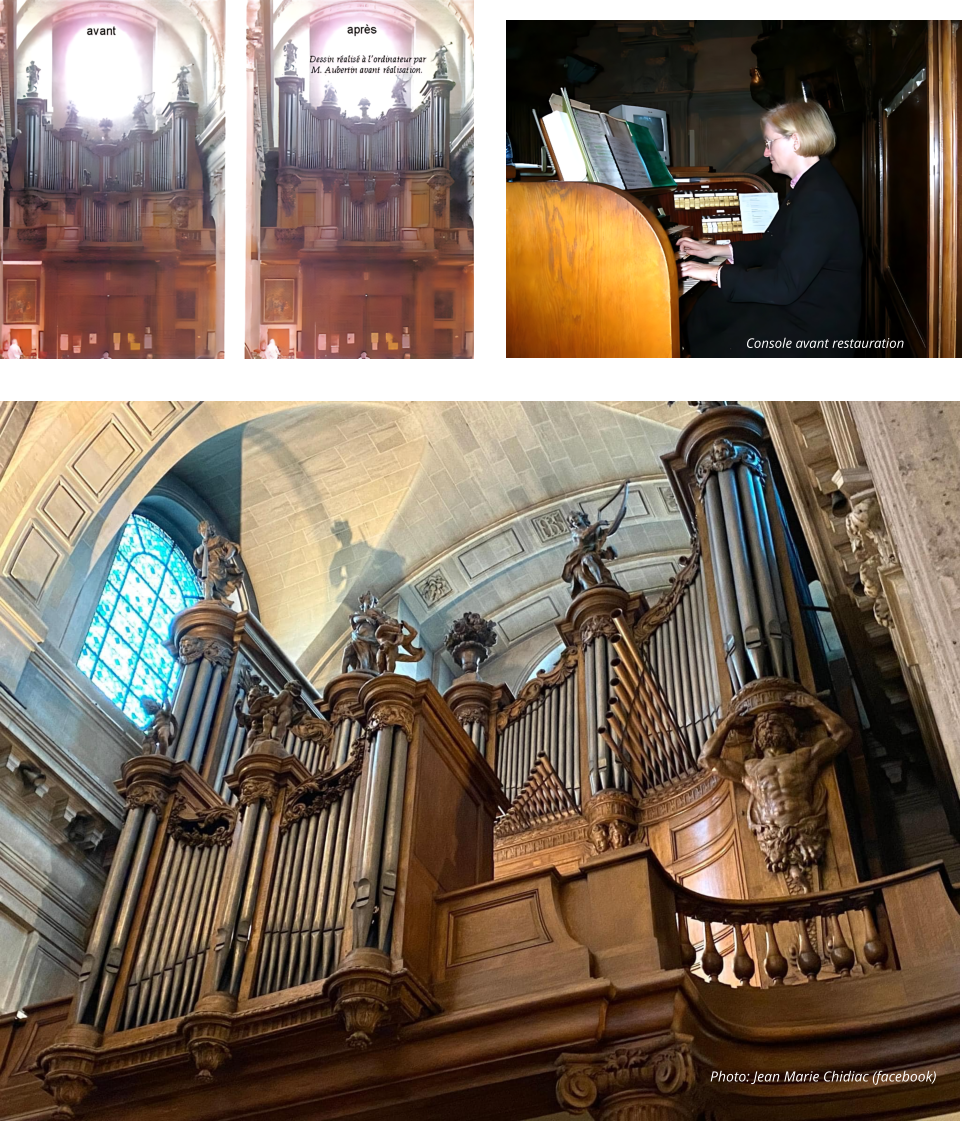
Reconstruction of the organ by Michel Gaillard (from the
Aubertin firm):
•
addition of a fourth manual
•
restoration of the original proportions of the case and
console; furthermore, the organ case was raised by 50
centimetres to create additional height for the addition
of a 32-foot Basson
•
modification of the Stoplist, addition of new stops
•
the chamades, coming from St Eustache, have been
rebuilt and moved from the top of the Swell to the front
of the case.
•
full revoicing
•
Improvement of the reliability of the electric traction.
2025
Overhaul by Sébastien Braillon and installation of a new
combinator by Christophe Cailleux
The organ contains a non-negligible amount of material dating
from Clicquot (pedal windchests and a few reeds).


1725 - François Thierry (1)
1766 - François-Henri Clicquot (6)
1790 - François-Henri Clicquot (3a)
1820 - Pierre-François Dallery (5)
1897 - Merklin (3a)
1927 - Koenig (3b)
1936 - Gonzalez (3b)
1961 - Roethinger & Boisseau (3a)
1987 - Barbéris (6)
2009 - Gaillard (3a)
2025 - Braillon (6)
III/50 - transmissions electro-pneumatique
Stoplist
Titular organist
Marie-Agnès Grall-Menet (grand-orgue)
Philippe Ourselin (suppléant)
Organistes célèbres ayant illustré l’instrument par le passé:
Jean-Nicolas Geoffroy (1633–1694), Charles Tournemire.
Parish website
Videos
Marie-Agnès Grall-Menet (grand-orgue)
Axel de Marnhac
Photos
Buffet : Jeroen de Haan
Eglise : Vincent Hildebrandt








The organs of Paris


ORGANS OF PARIS © 2026 Vincent Hildebrandt
E6
The organ of Saint Nicolas du Chardonnet comes from the
former parish church of Saints-Innocents, built by François
Thierry between 1723 and 1725 (IV/24).
1766
François-Henri Clicquot carried out repairs on the wind
system.
1787–1790
The organ was transferred to Saint-Nicolas-du-Chardonnet
and enlarged to IV/37 by François-Henri Clicquot. After his
death in 1790, the work was completed by his son Claude-
François Clicquot.
1820
The instrument was renovated by Pierre-François Dallery,
including some changes to the reed stops.
1897
Merklin was commissioned to rebuild the instrument,
reducing it to II/24. The former wooden gallery was replaced
by a stone one. At that time, the *Positif de dos* case was
placed above the *Grand Orgue* to conceal the expressive
box of the Récit.
1927
The organ was restored by P.-M. Koenig, who took the
opportunity to enlarge and revoice it.
1935–1936
A new gallery was installed, and the *Positif* was moved
back to its original position by Victor Gonzalez, who also
expanded the instrument. The pipework from Merklin’s
former Récit was placed in the Positif case, the shutters were
removed, and several new stops were added, shifting the
tonal palette toward a neo-classical style: 4’ Flûte, Nasard,
Quarte, Tierce, and a IV-rank Plein Jeu.
1961
The instrumental section was reconstructed by Roethinger
and Robert Boisseau. All the pipework was inventoried and
classified. The new stoplist was drawn up under the advice of
organist Léon Souberbielle and inspired by Dom Bedos’s fifth
design in his “descending classification” — for a large eight-
foot organ — with eight ranks of Plein Jeu at the Grand Orgue
and four ranks at the Positif.
The organ was brought to 43 stops distributed over three
manuals and pedal.
The action was electrified, and a detached console was
installed.
2007-2009
Reconstruction of the organ by Michel Gaillard (from the
Aubertin firm):
•
addition of a fourth manual
•
restoration of the original proportions of the case and
console; furthermore, the organ case was raised by 50
centimetres to create additional height for the addition of
a 32-foot Basson
•
modification of the Stoplist, addition of new stops
•
the chamades, coming from St Eustache, have been
rebuilt and moved from the top of the Swell to the front of
the case.
•
full revoicing
•
Improvement of the reliability of the electric traction.
2025
Overhaul by Sébastien Braillon and installation of a new
combinator by Christophe Cailleux
The organ contains a non-negligible amount of material dating
from Clicquot (pedal windchests and a few reeds).

Titular organist
Marie-Agnès Grall-Menet (grand-orgue)
Philippe Ourselin (suppléant)
Organistes célèbres ayant illustré l’instrument par le passé:
Jean-Nicolas Geoffroy (1633–1694), Charles Tournemire.
Parish website
Videos
Marie-Agnès Grall-Menet (grand-orgue)
Axel de Marnhac
Photos
Buffet : Jeroen de Haan
Eglise : Vincent Hildebrandt
1725 - François Thierry (1)
1766 - François-Henri Clicquot (6)
1790 - François-Henri Clicquot (3a)
1820 - Pierre-François Dallery (5)
1897 - Merklin (3a)
1927 - Koenig (3b)
1936 - Gonzalez (3b)
1961 - Roethinger & Boisseau (3a)
1987 - Barbéris (6)
2009 - Gaillard (3a)
2025 - Braillon (6)
III/50 - transmissions electro-pneumatique
Stoplist